Scope first
Time depends on the condition of the car

Mobile detailing
A semi-permanent protective layer bonded to your clear coat. Five of the six steps happen before the coating ever touches the car — that is the part that decides how it turns out.
Reviewed by Colorado Springs drivers · See testimonials
Scope first
Time depends on the condition of the car
5
Steps, start to finish
$0today
Quotes are free
What to expect
A ceramic coating is not a wax and it is not a sealant. It is a liquid polymer that chemically bonds to the clear coat and cures into a hard, transparent layer that does not wash off. That single difference is why a coating is measured in years while a sealant is measured in months and a wax in weeks.
Look at the order of work: a thorough exterior wash and decontamination, a clay bar treatment, paint enhancement and polishing, panel prep, and only then the application. Five steps before the coating, one step for the coating itself. That ratio is not padding — it is the whole thing.
The reason is simple and it is the most important sentence on this page: a coating locks in whatever is underneath it. It is optically clear and permanent. Every swirl mark, every water spot, every bit of embedded brake dust that is on the paint the day it is applied gets sealed in for the life of the coating. Skip the prep and you have not protected your paint, you have preserved its flaws under glass.
So the wash removes what is loose, the clay pulls out what is bonded into the clear coat — the grit you can feel with your fingertips after a wash — and the polishing stage levels the defects that are left. Panel prep then strips every trace of polishing oil, because a coating will not bond through residue. Only when the surface is genuinely bare does the coating go on.
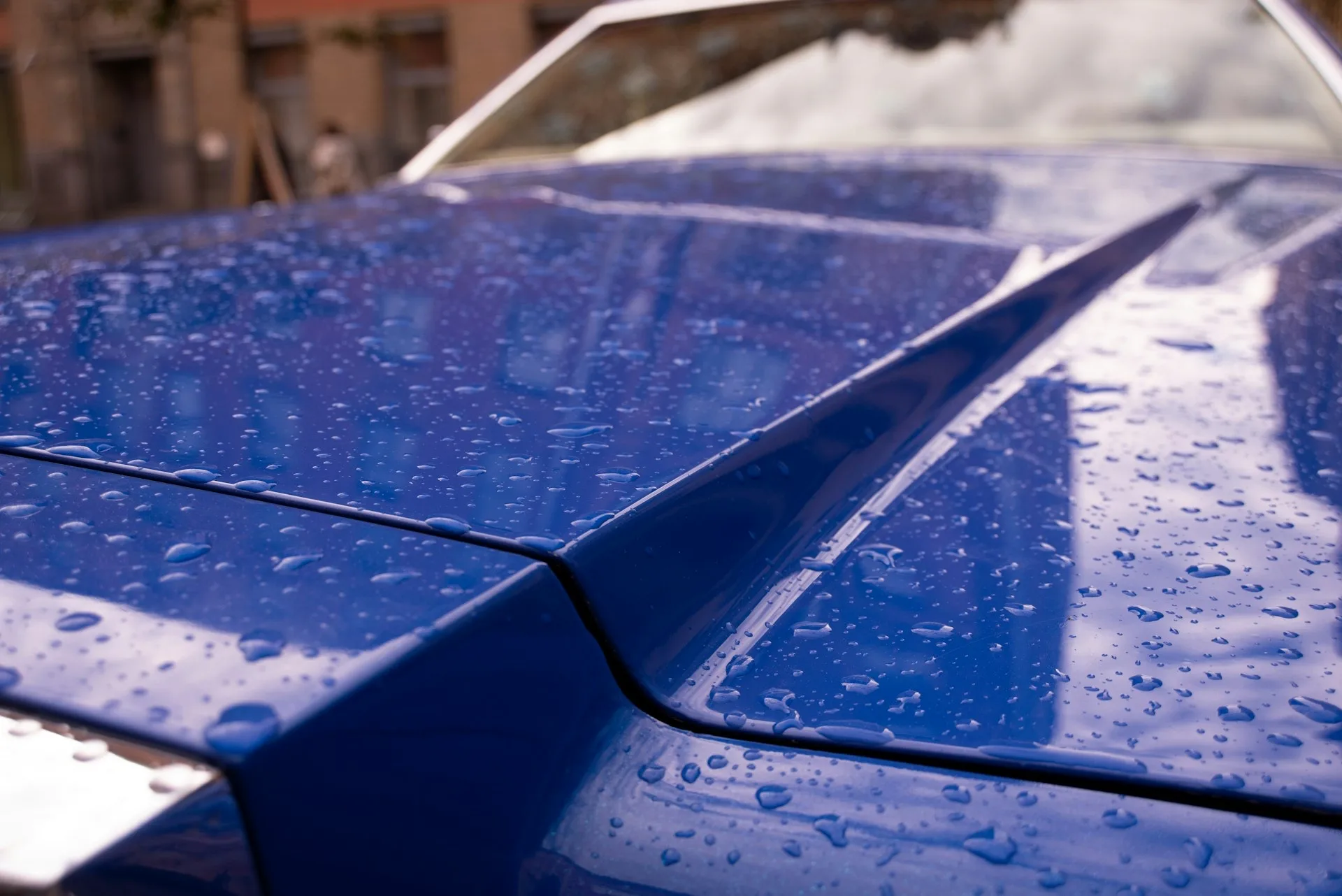
Water beads and runs off instead of sitting and drying into spots. Road film, brake dust and bug splatter have far less to grip, so washing gets faster and — this matters more than people expect — safer, because less scrubbing means fewer wash-induced swirls. The layer takes the chemical abuse that would otherwise land on your clear coat: bird droppings, tree sap, road de-icer, and ultraviolet light. And it holds gloss rather than dulling out over a season.
It is not a force field. A coating does not stop rock chips, it does not stop a shopping cart, and it does not make the car scratch-proof — it raises the threshold, it does not remove it. It does not mean you stop washing; it means washing is easier and does less damage. And it does not hide anything, which is the point made above and worth making twice.
Two local conditions do the real damage here. The first is altitude: at just over six thousand feet there is measurably less atmosphere filtering ultraviolet light, and UV is what oxidizes paint, fades reds and blacks, and chalks out clear coat over time. The second is winter road treatment. Colorado uses magnesium chloride brine rather than rock salt on the Front Range, and it is effective on ice precisely because it clings — which is also why it clings to your paint, your wheel wells and every seam underneath the car, and keeps working on them long after you have parked.
A coating does not make either of those go away. What it does is put a sacrificial, chemically resistant layer between them and the finish you paid for.
Longevity depends on the product, on the condition of the paint underneath, and above all on how the car is maintained afterwards. A coated car that goes through an automatic brush wash every week will not last as long as one that gets a proper hand wash. The coating survives chemicals far better than it survives abrasion.
The range from $1,195 to $1,495 reflects two things: the size of the vehicle, and the amount of correction the paint needs before coating. A nearly-new car that needs a light polish sits at one end. A daily driver with three years of automatic car washes worked into the clear coat sits at the other, and may need paint correction as a separate conversation before a coating makes any sense at all.
That is why this one is quoted in person rather than booked online. We look at the paint, tell you what will come out and what will not, and price it from there. If the honest answer is that your car needs correction first, or that a sealant would serve you better for what you are trying to achieve, that is what you will hear.
5 steps, start to finish.
Booking clarity
Your deposit is shown in review, before checkout begins.
Refund policyLast-minute bookings may need full payment up front. Cancellation timing stays clear either way.
Cancellation policyBook as guest now and create an account after confirmation if you want self-service management later.
Create an accountBefore you book
No. We arrive with water, power and every product on board, so all we need is room to work next to the vehicle.
Either one. We come to your home or office anywhere in the Colorado Springs area, or you can drop the car off with us — you pick which one when you book, and the drop-off address is on screen before you pay.
$399.99 to $1,495, depending on the size and condition of the vehicle. You see the exact amount on screen before you pay anything.
5 steps: Thorough exterior wash & decontamination; Clay bar treatment; Paint enhancement/polishing; Panel prep & surface prep; and Professional ceramic coating application.
You can change or cancel online any time up to 48 hours before your appointment. Inside that 48-hour window, contact us directly and we will help.


